 Photo: Samir Azad · CC BY-SA 4.0
Why is Tirthan Valley special?
Tirthan Valley is a narrow, forested river valley in Kullu district of Himachal Pradesh, at roughly 1,600 m, and it is special because it is the main gateway to the Great Himalayan National Park, a UNESCO World Heritage Site since 2014. It offers Himachal's mountain scenery without the crowds of Manali.
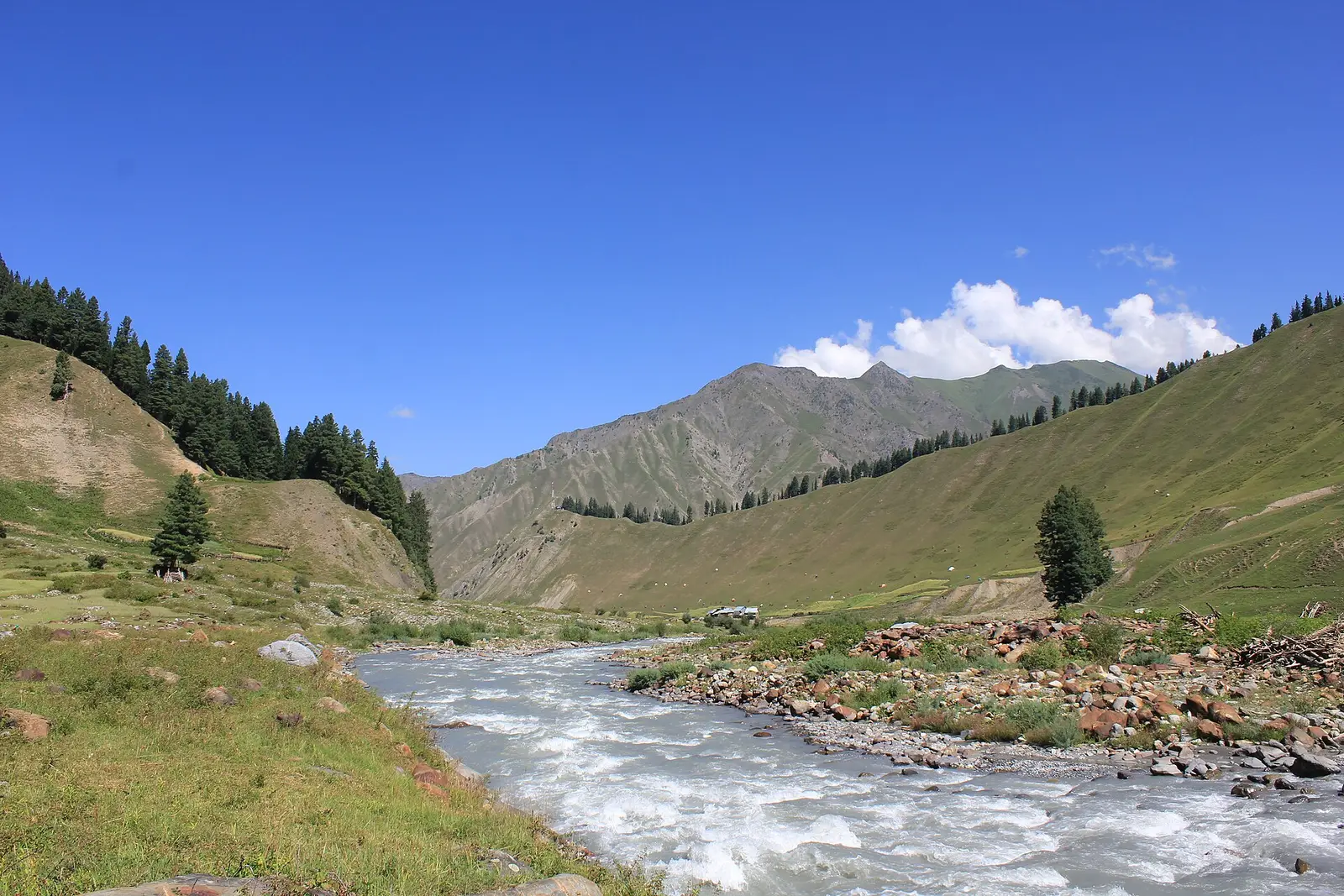
The Tirthan river is clear, cold and famous for trout. Villages such as Gushaini, Nagini and Sai Ropa sit along its banks, with apple orchards, slate-roofed houses and pine and deodar forest climbing up the slopes. A short drive away, the side valley of Jibhi and the road up to Jalori Pass add more forest walks, waterfalls and views.
This is a place to slow down: read by the river, walk to a waterfall, eat home-cooked Himachali food and perhaps do a day hike into the national park. It suits couples, families and anyone who finds the main hill stations too busy.
When is the best time to visit Tirthan Valley?
The best time to visit Tirthan Valley is March to June and September to November, when days are pleasant and trails are open. Winter is cold but peaceful, while monsoon brings landslide risk.
- March–April: Spring blossom in the orchards and cool, bright days.
- May–June: Warm days and comfortable nights; a good escape from Mumbai's pre-monsoon heat. Busier on weekends with travellers from North India.
- July–August: Monsoon. The valley is lush, but the river runs high and landslides can block roads. The region was hit by floods in 2023, so check conditions before travelling in the rains.
- September–November: Clear skies, autumn colours and apple harvest. Arguably the best season.
- December–February: Cold, with snow on higher ground. Jalori Pass often closes after heavy snowfall, but the valley itself is usually reachable.
How do you reach Tirthan Valley from Mumbai?
The most practical route is to fly from Mumbai to Chandigarh and drive about 250 km (roughly 6–7 hours) via Bilaspur, Mandi and the Aut tunnel. Bhuntar airport near Kullu is closer, but has limited flights.
Via Chandigarh
Chandigarh has direct flights from Mumbai. From there, hire a taxi up the Chandigarh–Manali highway to Aut, turn off for Banjar, and continue to Gushaini or Nagini. Compare fares on our flights page.
Via Bhuntar (Kullu)
Bhuntar is about 50 km from Tirthan, roughly 1.5–2 hours by road. Flights usually connect via Delhi, are few in number and can be cancelled in bad weather, so keep a buffer day.
Via Delhi and overnight bus
Many travellers fly to Delhi and take an overnight Volvo bus towards Manali, getting off at Aut after about 11–13 hours. From Aut, Banjar and the Tirthan villages are under an hour by taxi or local bus.
Where should you stay in Tirthan Valley?
Stay in a riverside homestay or cottage around Gushaini, Nagini or Sai Ropa for quiet and easy park access, or in Jibhi if you prefer forest views and more cafés.
- Gushaini: The heart of the valley and the starting point for many Great Himalayan National Park trails. Some homestays are across the river and reached by a short walk or a cable trolley.
- Nagini and Sai Ropa: Riverside stays, closer to Banjar. Sai Ropa has a park interpretation centre.
- Jibhi: Wooden cottages and homestays in a forested side valley, about 30–40 minutes from Gushaini. More lively and more popular.
- Banjar: The local market town, useful for ATMs and supplies.
Most stays are family-run with home-cooked meals. Mobile signal varies across the valley, and some riverside stays have only patchy data. Nights are cool even in May, so pack a fleece. If you are travelling by car, check whether your stay has parking near the road, since several properties are a short uphill or riverside walk from the nearest drop point.
What are the best things to do in Tirthan Valley?
The best things to do are short walks to waterfalls, a day hike into the Great Himalayan National Park, riverside time with a fishing rod (with a licence), and a day trip to Jibhi, Jalori Pass and Serolsar Lake.
- Chhoie waterfall: An easy walk of about an hour from the Gushaini–Nagini area to a tall waterfall in the forest.
- Great Himalayan National Park: Day hikes from Gushaini go up into the park's forests; multi-day treks need permits from the park office and a registered guide.
- Riverside afternoons: Simply sitting by the Tirthan, watching the light move across the water, is half the reason to come. Many homestays have their own sitting areas by the river.
- Jalori Pass: At about 3,100 m, with wide Himalayan views. From the pass, walk roughly 5 km through oak forest to Serolsar Lake, or about 3 km to the ruins of Raghupur Fort.
- Jibhi: A small waterfall, forest trails and the old Chehni Kothi tower temple nearby.
- Trout fishing: The Tirthan is known for brown trout. Fishing needs a licence from the Himachal fisheries department, and catch-and-release is encouraged.
- Village walks: Wander through orchards and villages and see traditional wood-and-stone houses.
Planning a national park trek
The Great Himalayan National Park protects high forests, alpine meadows and wildlife such as the Himalayan tahr, musk deer and the western tragopan. Overnight treks into the park, such as routes towards Rolla and Shilt, go through remote terrain with no shops or mobile signal. Register at the park office, hire a local guide and porter through a registered operator, and confirm current trail conditions and permit fees before you go, as these can change after heavy rain or snow.
What food should you try in Tirthan, and how do you travel responsibly?
Try siddu (steamed wheat bread stuffed with poppy or walnut paste, served with ghee), Himachali dham if you get the chance, rajma and rice, local trout and fresh apple juice in season. Most homestays serve wholesome home food; ask for local dishes.
- Follow park rules: no fires, no littering and go with a guide on longer trails.
- Do not play loud music by the river; sound carries far in a narrow valley.
- Get a fishing licence before fishing and respect closed seasons.
- Bring a refillable bottle and carry your waste back to Banjar or beyond.
- Use local guides and drivers to support the community.
How many days do you need for Tirthan? A sample 3-day plan
Plan three to four days in Tirthan, plus travel time. That allows a relaxed riverside day, a waterfall walk and a full day at Jalori Pass.
- Day 1, arrive and unwind: Reach Gushaini by afternoon from Chandigarh or Aut. Walk along the Tirthan and settle in.
- Day 2, waterfall and park: Morning walk to Chhoie waterfall, then a short hike into the Great Himalayan National Park area with a local guide.
- Day 3, Jibhi and Jalori: Drive via Jibhi to Jalori Pass, walk to Serolsar Lake, and return for an evening by the river.
Want more of Himachal? Read our guide to Chitkul or pair Tirthan with our Manali tour package from Mumbai. For flights, transfers and stays planned in one go, send us your dates.