 Photo: Rahul upreti · CC BY-SA 4.0
Why are Chopta and Tungnath special?
Chopta is a small meadow and roadside halt at about 2,700 m in Rudraprayag district, and it is the starting point for one of the most rewarding short treks in India: a few kilometres up to Tungnath, the highest Shiva temple in the world, and on to Chandrashila summit at roughly 4,000 m.
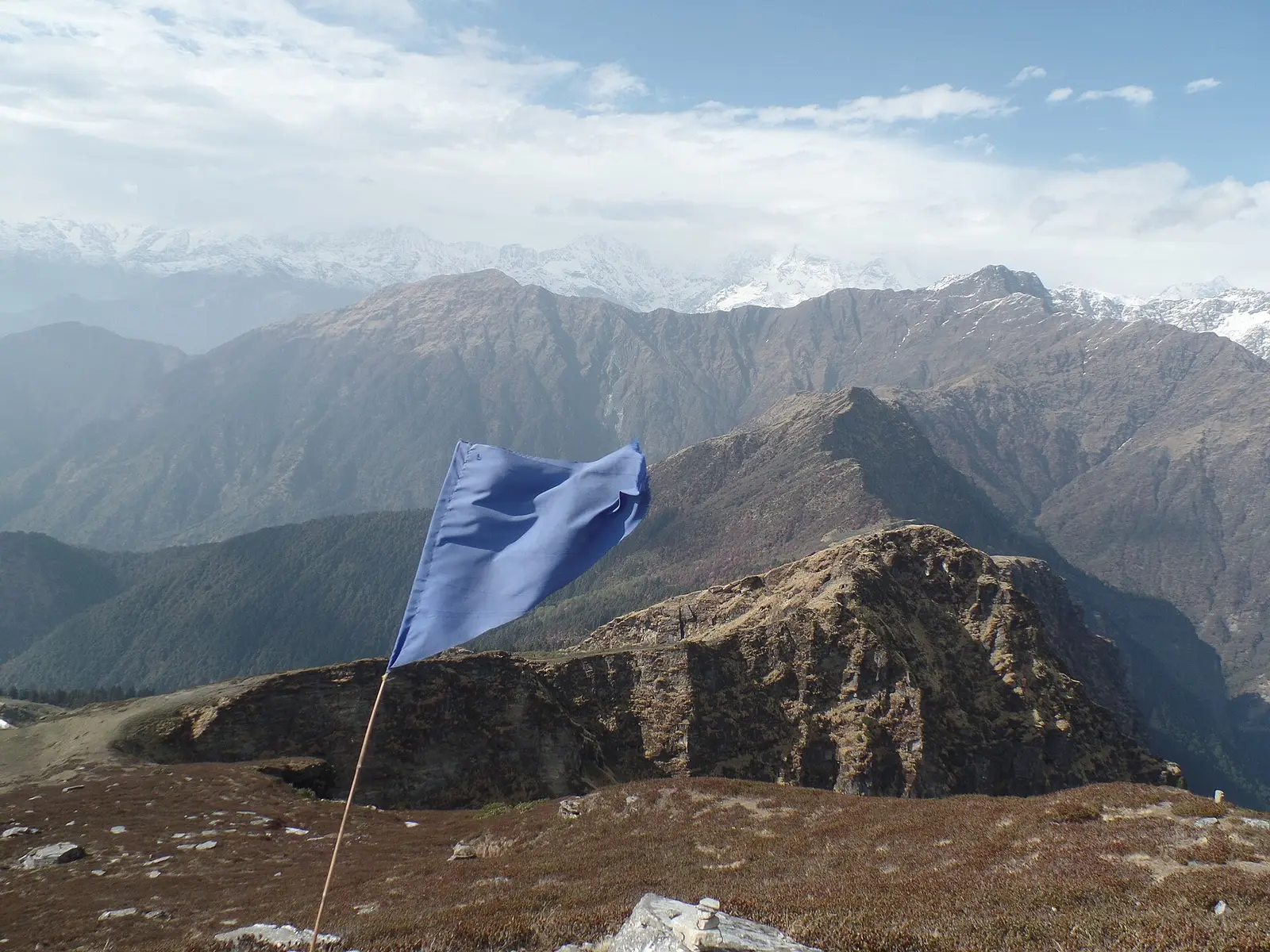
What sets Chopta apart is how much you get for relatively little effort. The trail is paved, the climb takes a few hours, and from the top you see a wide arc of snow peaks, including Chaukhamba, Kedarnath, Trishul and Nanda Devi on clear days. Around Chopta, oak and rhododendron forests open onto grassy bugyals (alpine meadows), and the area falls within the Kedarnath Wildlife Sanctuary, home to the Himalayan monal, Uttarakhand's colourful state bird.
Tungnath is also one of the Panch Kedar, five Shiva temples of the Garhwal Himalaya linked to the Pandavas in the Mahabharata. Its stone temple is centuries old, and for many visitors the trek is as much a pilgrimage as a hike.
When is the best time to visit Chopta and Tungnath?
The best time to visit Chopta is April to June and September to November. Spring brings rhododendron blooms and pleasant days; autumn gives the clearest mountain views. December to February is for snow lovers who are ready for real cold.
- March–April: Rhododendrons (buransh) flower red and pink along the forest road. Some snow may still lie on the upper trail.
- May–June: Warm days and the temple is open. This is also Char Dham season, so roads through Rudraprayag are busy.
- July–August: Monsoon. Meadows are lush, but landslides on the Rishikesh–Rudraprayag road are common and views are often clouded out.
- September–November: Clean air and sharp views of the peaks. The temple usually closes for winter around Diwali or soon after.
- December–February: Snow trek season. The temple is shut, the trail can be snowbound and the road to Chopta may close after heavy snowfall.
How do you reach Chopta from Mumbai?
The quickest way is to fly from Mumbai to Dehradun's Jolly Grant airport, then drive about 220–230 km to Chopta, roughly 8–9 hours through Rishikesh, Devprayag, Rudraprayag and Ukhimath. Most people break the journey with a night en route.
By air
Flights from Mumbai to Dehradun run direct on some days or via Delhi. Alternatively, fly to Delhi and take a train or overnight bus to Haridwar or Rishikesh. Compare fares on our flights page.
By train
There are long-distance trains from Mumbai to Haridwar and Dehradun, but the journey takes well over a day. From Haridwar or Rishikesh, you continue by taxi or state bus.
By road
The road follows the Ganga and then the Alaknanda before turning up the Mandakini valley to Ukhimath and on through forest to Chopta. Shared jeeps run between towns, but a private taxi from Rishikesh is far simpler. Avoid driving these roads after dark.
Where should you stay near Chopta?
Chopta itself has only basic lodges and camps, because it lies in a protected forest area. For more comfort, stay at Sari, Ukhimath, Duggalbitta or Baniyakund, all within about an hour of the trailhead.
- Chopta: Simple rooms and licensed camps right at the trailhead. Ideal for a pre-dawn start, but expect limited power and basic bathrooms.
- Baniyakund and Duggalbitta: A few kilometres before Chopta, with cottages and campsites in the forest.
- Sari village: Homestays and guesthouses at the base of the Deoria Tal trek. A good choice if you are doing both treks.
- Ukhimath: A proper small town with hotels, shops and ATMs, about an hour below Chopta.
Rules on camping in the high meadows have been tightened over the years to protect them, so book only licensed camps. Electricity at Chopta is often solar or generator-based for a few hours, so charge devices whenever you can. If you plan a pre-dawn start for Chandrashila, staying at Chopta itself saves you a dark, winding drive up from Ukhimath or Sari in the morning.
What is the Tungnath–Chandrashila trek like, and what else is there to do?
The Tungnath trek is about 3.5 km one way from Chopta on a paved trail, climbing steadily for 2–3 hours. Chandrashila summit is another 1–1.5 km of steeper, rougher path above the temple, usually under an hour.
The trek
- Difficulty: Easy to moderate. Anyone reasonably fit can do it at an unhurried pace. The altitude gain is significant, so take breaks and drink water.
- Timing: Many trekkers start before dawn to reach Chandrashila for sunrise. Carry a headlamp and check trail conditions locally first.
- What to carry: Warm layers even in summer, a rain jacket, water, snacks and trekking shoes with grip. Mules and porters are available at Chopta.
Coming from sea-level Mumbai, you will feel the thin air above 3,000 m. Climb slowly, avoid pushing for the summit if you develop a headache or nausea, and do not attempt the trek the same day you arrive after a long drive. Weather changes quickly near the top, so turn back if cloud closes in.
Other things to do
- Deoria Tal: A trek of about 2.5–3 km from Sari village to a lake that reflects the Chaukhamba peaks on still mornings.
- Omkareshwar temple, Ukhimath: The winter seat of Kedarnath, worth a stop on the drive.
- Birdwatching: The forests around Chopta are good for monal, pheasants and Himalayan birds, especially in spring.
- Musk deer centre at Kanchula Kharak: On the road from Chopta towards Gopeshwar; check whether it is open to visitors.
What food should you try, and how do you travel responsibly?
Try simple Garhwali food at dhabas and homestays: mandua (finger millet) roti, jhangora (barnyard millet) kheer, kafuli (a leafy green curry), aloo ke gutke and buransh juice made from rhododendron flowers. Meals at Chopta are basic, so a hot plate of Maggi and chai at the trailhead is part of the experience.
- Do not leave plastic on the trail or in the meadows. Carry a bag for your waste.
- Keep to the trail and do not pick flowers or plants in the sanctuary.
- Dress respectfully at the temple and follow the priests' instructions.
- Avoid loud music in camps; sound travels in the valley.
- Refill bottles instead of buying new ones where possible.
How many days do you need for Chopta? A sample 3-day plan
Plan at least two days at Chopta, plus a day each way from Dehradun or Rishikesh. Three days lets you do both Tungnath–Chandrashila and Deoria Tal without rushing.
- Day 1, Rishikesh to Sari or Chopta: Early start, stops at Devprayag and Rudraprayag, and arrive by late afternoon.
- Day 2, Tungnath and Chandrashila: Pre-dawn start for sunrise at Chandrashila, darshan at Tungnath on the way down, and a slow afternoon in the meadows.
- Day 3, Deoria Tal: Morning trek from Sari to the lake and back, then drive to Rudraprayag or Rishikesh for the night.
If you love the Himalaya, compare Chopta with Tirthan Valley in Himachal or our Manali tour package from Mumbai. Want flights, cabs and stays sorted in one go? Send us your dates and we will plan Chopta as a custom trip.