 Photo: Phadke09 · CC BY-SA 4.0
Why is Kaas Plateau special?
Kaas Plateau is a flat laterite plateau about 25 km west of Satara, at around 1,200 metres, that blooms with hundreds of species of wildflowers for a few weeks after the monsoon. It is part of the Western Ghats UNESCO World Heritage site and is often called Maharashtra's Valley of Flowers.
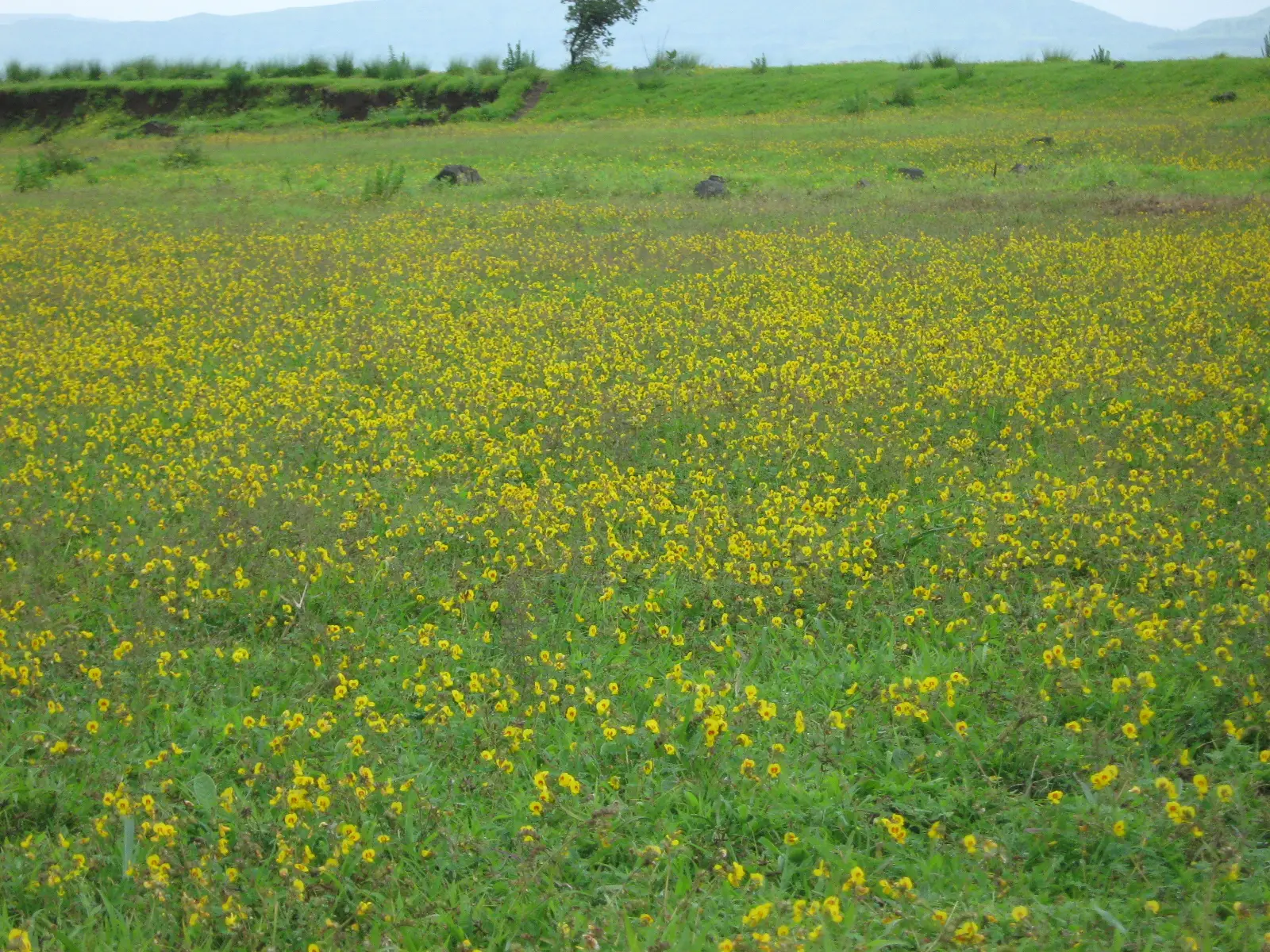
For most of the year, Kaas looks like a bare, rocky tableland. Its soil is thin, and only specialised plants can survive. Then, from roughly late August, the plateau changes colour week by week: yellow sheets of Smithia, purple bladderworts (small carnivorous plants), white pompom-like Eriocaulon, pink balsams and rare orchids. Many of these plants are endemic to the Western Ghats, and some are found only in this region.
What makes Kaas special is that this happens within an easy drive of Pune and a weekend's reach of Mumbai. You do not need to trek; the flowers grow right beside walking paths along the plateau.
When is the best time to visit Kaas Plateau?
The flowering season at Kaas usually runs from late August to early October, with the peak typically around mid-September. Exact timing shifts each year with the monsoon, so check the official updates before you book.
- Late August: early bloom with patches of colour. Still rainy and misty.
- Mid-September: usually peak bloom, with the widest carpets of flowers. Also the most crowded, especially on weekends.
- Late September–early October: different species take over, and the season winds down. Fewer crowds.
- Rest of the year: the plateau is open but mostly bare. Monsoon (June–August) is misty and green, good for drives and nearby waterfalls but not flowers.
Every few years, there is a mass bloom of the karvi shrub (Strobilanthes) on the slopes around Kaas, turning them purple. These cycles are irregular, so take any prediction as approximate.
Do you need to book Kaas Plateau in advance?
Yes, during the flower season you need to book a visit online in advance. The forest department and local committee that manage Kaas cap the number of visitors per day and run time slots to limit damage to the plateau.
Bookings usually open on the official Kaas website shortly before the season. Slots for weekends and peak weeks sell out quickly. Fees, slot timings and parking arrangements change each year, so check the current rules before you travel. Outside the bloom season, booking is generally not required.
In season, private vehicles are often stopped at a parking area, and visitors are taken to the plateau by shuttle buses. Carry your booking confirmation and ID.
How do you reach Kaas Plateau from Mumbai?
Kaas Plateau is about 270–290 km from Mumbai, roughly 5–6 hours by road via Pune and Satara. You can also take a train to Satara and a taxi for the last 25 km.
By road
Take the Mumbai–Pune Expressway, then NH48 south past Pune towards Satara. From Satara, a winding hill road climbs west via Yawateshwar to the plateau. Leave Mumbai very early or the night before, as weekend traffic around Pune and the Khambatki ghat can add hours. MSRTC buses run frequently from Mumbai and Pune to Satara.
By train
Satara station is on the Pune–Miraj line. Trains such as the Koyna Express and Mahalaxmi Express connect Mumbai to Satara, though schedules change, so check before booking. From Satara, hire a taxi or auto to Kaas.
By air
Pune is the nearest airport, about 3 hours from Kaas by road.
Many travellers stay in Satara and visit Kaas the next morning. Mahabaleshwar and Panchgani are also within reach for a longer trip.
Where to stay near Kaas Plateau
Most visitors stay in Satara city, which has the widest choice of hotels. There are also a few resorts, campsites and homestays on the Kaas–Bamnoli road, closer to the plateau.
- Satara: hotels across budgets, restaurants and easy access to the bus and railway stations.
- Kaas–Bamnoli road: resorts and homestays with valley views. Fewer options, so book early in bloom season.
- Mahabaleshwar or Panchgani: if you want a longer hill-station break, though it adds driving time.
We can help book stays in Satara or Mahabaleshwar to match your Kaas slot.
What are the best things to do at and near Kaas Plateau?
Beyond the flower walks, the Kaas area has Kumudini Lake, the Thoseghar and Vajrai waterfalls, boating at Bamnoli, and the historic Sajjangad and Ajinkyatara forts.
Flower walks on the plateau
Stick to the marked paths. Look closely: many of the flowers are tiny, only a few millimetres across. A macro lens or a phone clip-on lens helps for photography.
Kumudini (Kaas) Lake
A short drive from the plateau, this lake is surrounded by forest and makes a calm stop after the flower walk.
Thoseghar and Vajrai waterfalls
Thoseghar is a series of falls with a viewing platform, best in the monsoon and early post-monsoon. Vajrai, further away, is among the tallest waterfalls in India, reached by a short walk.
Bamnoli boating
At Bamnoli, on the backwaters of the Koyna dam, local boats take visitors out on the Shivsagar reservoir. Check local operating rules on the day.
Sajjangad and Ajinkyatara
Sajjangad is associated with Samarth Ramdas Swami, and Ajinkyatara fort overlooks Satara city. Both are good half-day add-ons.
What food should you try around Satara?
Satara is known for its kandi pedhe, a caramelised milk sweet, and for spicy Maharashtrian food. Food on the plateau is limited to small stalls, so eat in Satara.
- Kandi pedhe: Satara's famous brown milk sweet. Buy a box to take home.
- Misal pav and pohe: the go-to breakfast before an early slot.
- Zunka bhakar and pithla bhakri: simple, filling village food at stalls near the plateau.
- Kolhapuri-style mutton: spicy thalis are easy to find in Satara.
How to visit Kaas Plateau responsibly
Kaas is a fragile, protected ecosystem, and trampling has damaged parts of it in past seasons. Follow the rules strictly.
- Stay on marked paths and behind fencing. Never walk or lie on the flowers for photos.
- Do not pluck, collect or dig up plants.
- Avoid plastic and carry your litter back.
- Keep noise down, and follow forest department staff instructions.
Sample weekend Kaas Plateau plan from Mumbai
A Kaas weekend from Mumbai works best with a Friday-evening departure.
- Friday night: drive or take a train to Satara. Overnight in Satara.
- Saturday: early-morning slot at Kaas, followed by Kumudini Lake and Bamnoli boating. Afternoon at Thoseghar falls, then back to Satara.
- Sunday: morning visit to Sajjangad or Ajinkyatara, pick up kandi pedhe, and drive back to Mumbai.
For more Sahyadri escapes, read our Bhandardara guide or our list of weekend getaways from Mumbai. Want us to plan a Kaas trip for your family or group with transport and stay? Share your dates and group size.