 Photo: Original: Samudra Bikash Hazarika Derivative work: UnpetitproleX · CC BY-SA 4.0
Why is Dzukou Valley special?
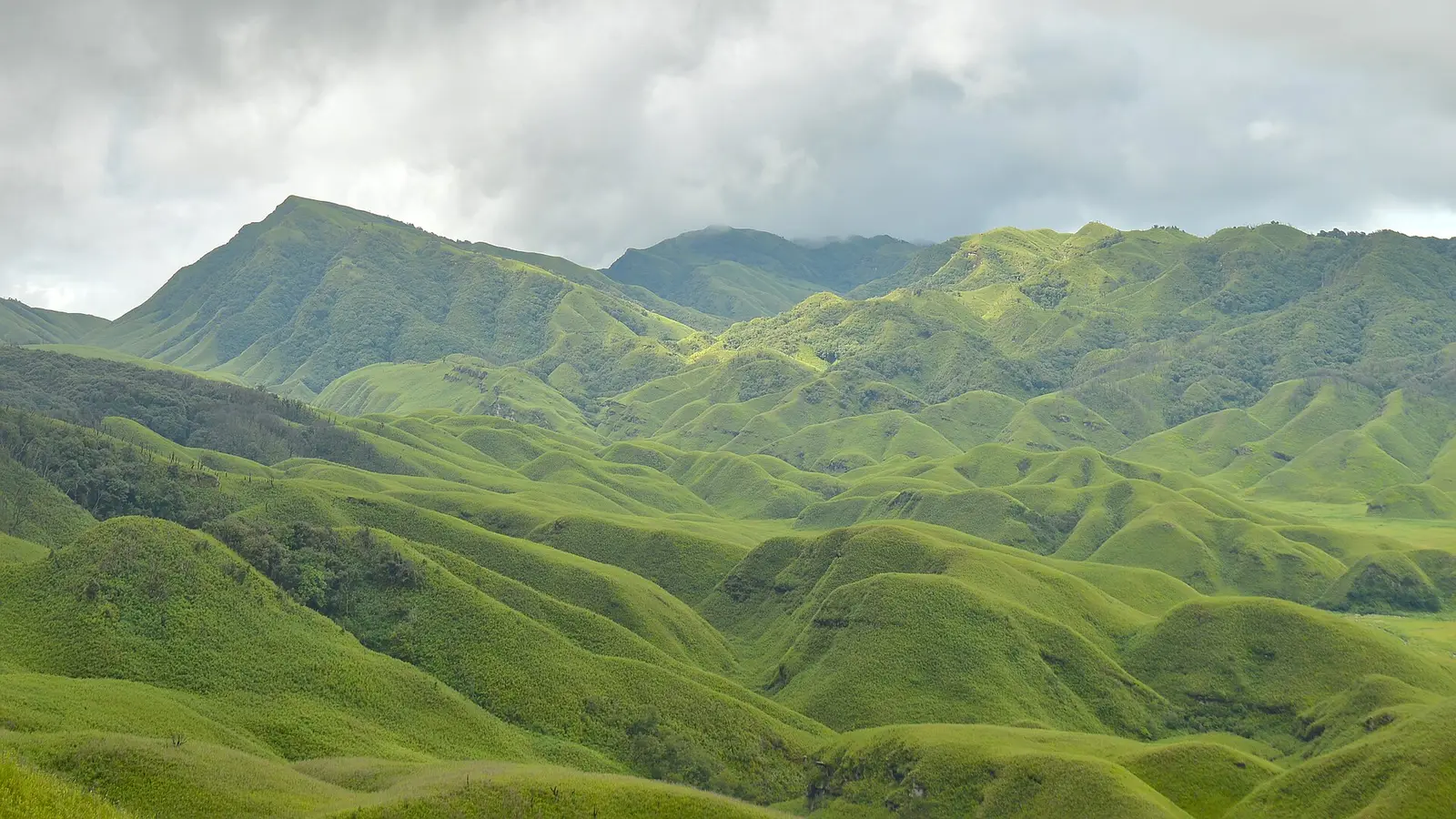
Dzukou Valley is a high, rolling valley on the border of Nagaland and Manipur, at roughly 2,400 metres, reached only on foot from villages south of Kohima. It is known for its unusual landscape of smooth, grassy hills cut by streams, and for the Dzukou lily that blooms here in the monsoon.
The rounded "hills" are actually covered in a dense dwarf bamboo that looks like a lawn from a distance. In the early morning, mist sits in the hollows and the valley looks almost unreal. Streams wind through the valley floor, and in winter they sometimes freeze.
Dzukou has stayed relatively quiet compared to treks in Himachal or Uttarakhand, mostly because Nagaland is far from metro cities and needs a permit. That is exactly why it rewards the effort. Combine it with Kohima, the Second World War cemetery, and the Angami villages around Khonoma, and you have one of the most distinctive short trips in India.
When is the best time to visit Dzukou Valley?
October and November are the best months for Dzukou Valley, with clear skies, green slopes and dry trails. June to September is the season for flowers, including the Dzukou lily, but brings rain, leeches and slippery paths.
- June–September: the valley is at its greenest, and the pink Dzukou lily usually blooms around June–July. Expect heavy rain and muddy trails.
- October–November: clear views, comfortable trekking and cold nights. Ideal for first-timers.
- December–February: very cold, with frost and occasionally frozen streams. The grass turns brown. Early December can be combined with the Hornbill Festival near Kohima, usually held in the first ten days of the month.
- March–May: dry and warming. This is also the season when forest fires have affected the area in some years; check local updates before going.
How do you reach Dzukou Valley from Mumbai?
Fly from Mumbai to Dimapur, drive about 3 hours to Kohima, then start the trek from Viswema or Zakhama, both 20–25 km south of Kohima. Indian citizens from outside Nagaland need an Inner Line Permit.
Inner Line Permit
Indian tourists need an Inner Line Permit (ILP) to enter Nagaland. It can usually be applied for online through the Nagaland government's e-ILP portal before travel. Rules and fees change, so check current requirements before you go and carry printed and digital copies along with a photo ID.
By air
Dimapur airport has limited direct flights from Mumbai, so most routes connect via Kolkata, Delhi or Guwahati. Another option is to fly to Guwahati and take a train or overnight bus to Dimapur. Check Mumbai–Dimapur and Mumbai–Guwahati fares.
By rail
Dimapur is Nagaland's main railway station, with long-distance trains from Guwahati and beyond. From Mumbai, rail takes well over two days, so flying to Guwahati or Dimapur is more practical.
Trek routes
- Viswema route: drive from Viswema village to the road head, then a steep climb of 1.5–2 hours to the ridge, followed by a gentler walk along the ridge to the rest house. Total roughly 4–5 hours.
- Zakhama route: shorter in distance but steeper and through forest, taking about 3–4 hours up.
Many trekkers go up via Viswema and come down via Zakhama. Both routes are well marked, but hiring a local guide is a good idea, especially for first-timers.
Where to stay at Dzukou Valley
The only stay inside the valley is a basic rest house run by the local community, with dormitory beds, a few private rooms and camping space. Kohima has hotels and homestays for the nights before and after.
- Dzukou rest house: dormitory floors and some rooms; bedding is limited, so carry a sleeping bag. Simple meals and tents may be available. Facilities and charges change, so confirm before you go.
- Camping: allowed in designated areas near the rest house. Bring warm gear; nights can go below freezing in winter.
- Kohima: hotels and homestays across budgets. Stay here the night before for an early start.
- Khonoma or Viswema: village homestays for a quieter base.
What are the best things to do at Dzukou Valley?
The main experience is the trek itself, a night in the valley and a walk across the valley floor at sunrise. Pair it with Kohima's war cemetery, museum and nearby villages.
Walk the valley floor
From the rest house, trails lead down to the streams and across the grassland. A half-day loop gives a real sense of the scale.
Sunrise and stars
Dawn comes very early in the Northeast. Be up by 4.30–5 am in summer to watch the mist lift. On clear nights, the sky is excellent for stargazing.
Kohima War Cemetery
The Commonwealth War Cemetery marks the 1944 Battle of Kohima. It is quiet, well kept and moving.
Khonoma village
About 20 km from Kohima, Khonoma is an Angami village known for its conservation efforts, terraced fields and stone gateways. Visiting with a local guide is recommended.
Hornbill Festival
If you travel in early December, the Hornbill Festival at Kisama heritage village showcases music, dance, food and crafts from Naga tribes. Book stays well in advance.
What food should you try in Nagaland?
Naga food is smoky, spicy and built around meat, bamboo shoot and fermented ingredients. Vegetarians will find simple rice, dal and vegetables, but should ask in advance.
- Smoked pork with bamboo shoot: the most famous Naga dish.
- Axone (akhuni): fermented soybean with a strong aroma, used in curries and chutneys.
- Raja mircha: the ghost chilli, among the hottest in the world. Use with caution.
- Galho: a comforting rice-and-vegetable porridge, sometimes with meat.
How to trek Dzukou responsibly
Dzukou is managed by local village bodies, and its fragile grassland is vulnerable to litter and fire.
- Carry all your waste back down. There is no garbage collection in the valley.
- Never light fires outside designated spots; dry-season fires have damaged the valley before.
- Do not pluck the Dzukou lily or other flowers.
- Pay the local entry and stay charges, and follow the rules of the community that manages the area.
- Respect local customs, including restrictions on alcohol in Nagaland.
Sample 3-day Dzukou Valley plan
Three days from Kohima covers the trek, a night in the valley and a bit of local culture.
- Day 1: arrive in Dimapur, drive to Kohima, and visit the War Cemetery in the evening. Check permits and buy supplies.
- Day 2: early drive to Viswema, trek up to Dzukou, and spend the afternoon exploring the valley floor. Overnight at the rest house or in a tent.
- Day 3: sunrise in the valley, then descend via Zakhama. Afternoon visit to Khonoma, or rest in Kohima.
For more of the Northeast, our Meghalaya tour package from Mumbai is an easy add-on via Guwahati, and Ziro Valley is another quiet valley worth the trip. Our team can plan flights, permits support and cabs as a custom trip — send us your dates.